Game UI Design Elements: A Practical Guide to Enhancing Player Engagement
Game UI design plays a critical role in shaping how players interact with a game. In this article, we’ll explore the foundational components of Game Ui Design Element Part 1, a UI asset pack designed for developers seeking polished, functional, and visually appealing interface elements. While many UI kits flood the market, this particular set stands out for its balance of aesthetics and usability.
What Makes Game Ui Design Element Part 1 Worth Considering
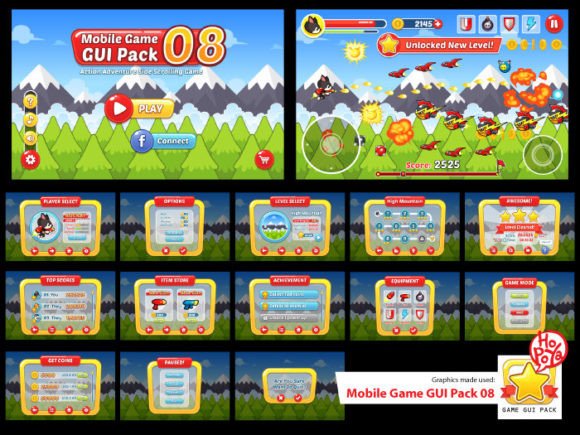
At its core, Game Ui Design Element Part 1 offers a suite of pre-built UI components tailored for game developers. These include menus, buttons, icons, and progress indicators — all essential for crafting intuitive and immersive gameplay experiences. The pack is particularly useful for developers who need to streamline their UI design process without compromising on visual quality or functionality.
One of the key selling points is its focus on usability. Each element is designed with player interaction in mind, ensuring that menus are easy to navigate, buttons provide clear feedback, and icons are instantly recognizable. This level of attention to detail can significantly reduce development time and help maintain a cohesive visual language across a game’s interface.
Key Features and Functional Value
Let’s break down the primary components included in Game Ui Design Element Part 1 and how they contribute to the overall user experience:
- Menus: Clean, responsive layouts that support both desktop and mobile platforms.
- Buttons: Customizable with hover and active states, enhancing interactivity.
- Icons: Consistent in style and scalable, ensuring clarity at any size.
- Progress Bars: Visually informative and easy to integrate into game mechanics.
Each element is built with flexibility in mind, allowing developers to adapt the UI to different game genres — from fast-paced action titles to slower, narrative-driven experiences. The design language is modern but not overly stylized, which helps maintain broad appeal across different player demographics.
Real-World Performance and Usability
In practice, Game Ui Design Element Part 1 holds up well under real-world development scenarios. The assets are typically delivered in formats compatible with major game engines like Unity and Unreal, which simplifies integration. Developers can import the UI components and begin customizing them with minimal effort, thanks to well-organized layers and naming conventions.
From a usability standpoint, the UI elements are intuitive and follow established design patterns. This is important because players often expect certain behaviors from buttons, menus, and progress indicators. Deviating too far from these expectations can lead to confusion or frustration. With this UI pack, the learning curve for players is minimal, allowing them to focus on gameplay rather than navigation.
Design Quality and Visual Consistency
Visual consistency is one of the strongest aspects of Game Ui Design Element Part 1. All components share a unified color palette, typography, and visual style, which helps maintain a cohesive look throughout the game. This consistency extends to spacing, alignment, and animation cues, which are often overlooked but essential for a polished UI.
The design quality is especially beneficial for indie developers or small studios that may not have dedicated UI artists. Instead of creating assets from scratch, teams can leverage this pack to maintain a professional appearance without the overhead of custom design work. That said, developers with specific branding or thematic requirements may need to invest additional time in customization to ensure the UI aligns with their game’s overall aesthetic.
Who Benefits Most from This UI Pack
Game Ui Design Element Part 1 is particularly valuable for:
- Indie developers: Who need to build a game quickly and efficiently without sacrificing UI quality.
- Small studios: Looking to maintain consistency across multiple projects with limited design resources.
- Prototypers: Who want to test gameplay mechanics with a functional UI before investing in custom visuals.
- Freelancers: Building games for clients and needing to deliver polished interfaces under tight deadlines.
It’s also a good fit for developers targeting mobile platforms, where UI clarity and responsiveness are crucial due to smaller screen sizes and touch-based controls. However, those working on highly stylized or niche games may find the design too generic and may prefer to commission custom UI assets.
Practical Considerations and Limitations
While Game Ui Design Element Part 1 offers many benefits, it’s important to consider its limitations. First, while the pack is flexible, it may not fully align with every game’s unique art direction. Developers may need to tweak colors, fonts, or animations to better match their game’s tone.
Additionally, some users may find that the UI elements lack deep customization options out of the box. For example, if a game requires dynamic UI scaling or complex state transitions, developers may need to implement additional logic or animations manually.
Finally, while the UI pack is designed to be SEO-friendly — often including optimized file names and descriptions — it’s still up to the developer to implement these assets in a way that supports discoverability. For example, using descriptive alt text for UI screenshots or embedding relevant keywords in game descriptions can help improve visibility in app stores and search engines.
Final Thoughts: Is Game Ui Design Element Part 1 Right for You?
For developers seeking a reliable, well-crafted UI solution that balances aesthetics and function, Game Ui Design Element Part 1 is a solid choice. It provides a strong foundation for building game interfaces without requiring deep design expertise. Its value is most apparent for indie developers and small teams who need to maintain visual consistency and reduce development overhead.
However, if your project demands a highly unique or thematic interface, this pack may serve more as a starting point than a final solution. As with any asset pack, it’s important to evaluate how well it aligns with your game’s specific needs and long-term goals. Used thoughtfully, Game Ui Design Element Part 1 can help elevate your game’s presentation and improve player engagement — two critical factors in today’s competitive market.