Enhancing Early Literacy: The Power of the Letters for Kids Alphabet Game
In the ever-evolving landscape of early childhood education, innovative tools are emerging to meet the growing demand for accessible, engaging, and effective learning resources. One such tool that has gained traction among educators, parents, and learning professionals is the Letters for Kids, Alphabet Game. This educational printable offers a dynamic approach to letter recognition, combining play with pedagogy to support foundational literacy skills in young learners.
What Is the Letters for Kids, Alphabet Game?
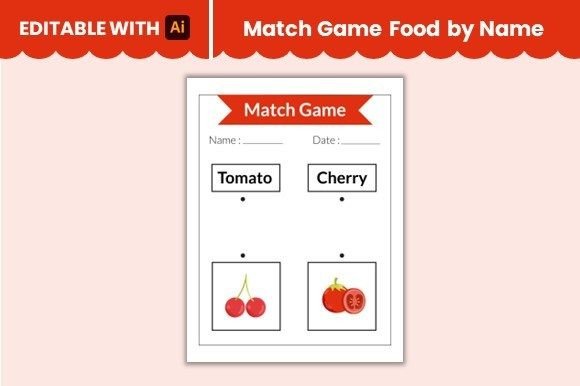
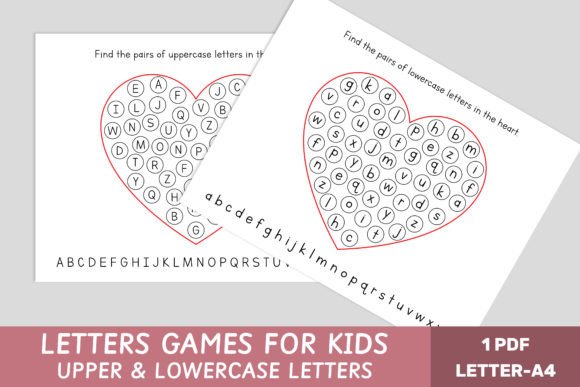
The Letters for Kids, Alphabet Game is a downloadable and printable educational resource designed to reinforce letter recognition through two distinct memory-style games. The first game focuses on uppercase letters, challenging children to find matching pairs. The second version does the same for lowercase letters. Each game is structured to be visually appealing and easy to use, making it ideal for both structured and informal learning environments.
Available in two standard print sizes—US Letter (8.5” x 11”) and A4 (210 mm x 297 mm)—the game is designed with flexibility in mind. It can be printed at home or through a professional print service, and laminating the cards ensures durability and long-term reuse, making it a cost-effective solution for educators and parents alike.
Why Letter Recognition Matters
Letter recognition is one of the earliest and most critical components of literacy development. Research consistently shows that children who can identify letters by name and sound are more likely to become proficient readers. The Letters for Kids, Alphabet Game addresses this need by offering a tactile, interactive experience that encourages repetition, visual memory, and pattern recognition—all essential skills in early literacy.
- Builds foundational knowledge for reading and writing
- Supports cognitive development through memory-based play
- Encourages independent learning and focus
Meeting the Needs of Modern Educators and Parents
As educational models shift toward more personalized and flexible learning environments, resources like the Letters for Kids, Alphabet Game are gaining popularity. Whether used in a traditional classroom, homeschool setting, or as part of a child’s leisure activities, this game offers a practical solution for reinforcing literacy without the need for digital screens or complex setup.
Professionals in education, content creation, and parenting are increasingly seeking out tools that align with the following trends:
- Screen-free learning: With rising concerns over screen time, especially for young children, printable games offer a refreshing alternative that promotes hands-on engagement.
- DIY and customizable resources: The rise of print-at-home materials reflects a broader movement toward accessible, customizable, and affordable learning tools.
- Parent and educator collaboration: As the line between home and school learning blurs, there’s a growing demand for resources that support both environments seamlessly.
Aligning with Broader Educational and Market Trends
The success of products like the Letters for Kids, Alphabet Game reflects a larger shift in how learning is delivered and consumed. The education sector has seen a surge in demand for printable learning tools, especially among parents and educators navigating hybrid or remote learning scenarios. This trend is supported by the growing ecosystem of digital marketplaces and online platforms that offer curated educational content.
Moreover, as entrepreneurship in the education space expands, creators and small business owners are capitalizing on the demand for high-quality, niche educational resources. The Letters for Kids, Alphabet Game exemplifies this trend, blending creativity, pedagogy, and practicality into a single product that can be easily distributed and scaled.
Designing for Durability and Engagement
A key feature of the Letters for Kids, Alphabet Game is its emphasis on quality and usability. The recommendation to print on heavy cardstock and laminate the cards speaks to a growing consumer expectation for long-lasting, reusable educational materials. In a market increasingly focused on sustainability and cost-effectiveness, this design choice aligns with both practical and environmental considerations.
For educators managing limited budgets or parents looking for affordable enrichment activities, the ability to reuse the game multiple times without degradation is a significant advantage. Additionally, the tactile nature of the game supports kinesthetic learning, which is especially beneficial for children who learn best through physical interaction.
Integrating into Learning Workflows
One of the most compelling aspects of the Letters for Kids, Alphabet Game is its adaptability. Teachers can integrate it into literacy centers, use it as a warm-up activity, or incorporate it into small group instruction. Parents can use it during structured learning time or as a fun activity during downtime. Even creators and content marketers can leverage the game as part of a broader content strategy—offering it as a freebie or premium resource to build audience engagement and brand authority.
For instance, a homeschooling parent might pair the game with a phonics curriculum to reinforce letter-sound relationships. A kindergarten teacher could use it as a transition activity between lessons. A children’s content creator might include it in a downloadable activity pack shared with their audience as part of a newsletter or social media campaign.
Looking Ahead: The Future of Educational Printables
The rise of the Letters for Kids, Alphabet Game is not an isolated phenomenon but rather a reflection of a broader movement toward personalized, accessible, and high-impact learning solutions. As technology continues to evolve, the demand for offline, tactile experiences is growing—especially among parents and educators who recognize the value of balancing digital and physical learning modalities.
Looking forward, we can expect to see more innovations in the printable education space, including interactive elements, augmented reality integrations, and even AI-driven customization. However, the core appeal of simple, effective tools like the Letters for Kids, Alphabet Game will remain strong. These resources offer immediate value, require minimal setup, and deliver measurable learning outcomes—making them indispensable in both traditional and non-traditional learning environments.
Conclusion: A Simple Tool with Lasting Impact
In a world where educational tools are increasingly complex and technology-driven, the Letters for Kids, Alphabet Game stands out for its simplicity, accessibility, and effectiveness. It bridges the gap between traditional learning methods and modern educational needs, offering a flexible, engaging, and durable solution for early literacy development.
Whether you're a classroom teacher, a homeschooling parent, a content creator, or an entrepreneur in the education space, the Letters for Kids, Alphabet Game represents a valuable asset. It not only supports the immediate goal of letter recognition but also aligns with broader trends in education, creativity, and consumer behavior. As the demand for high-quality, user-friendly learning tools continues to grow, resources like this will play an increasingly important role in shaping the future of early childhood education.